


Several years ago, I came across something called the Mnemonic Major System. It’s a really cool way of remembering numbers, even if they’re really long.
At the time, my YouTube channel’s focus was helping college students to perform better academically. This meant a video on the Major System was definitely in my wheelhouse!
I got really excited about it, and I spent dozens of hours researching the topic, testing it myself, and memorizing a bunch of long, random numbers. I’m bolding “random” for a reason that’ll become obvious soon.
I then spent dozens more hours scripting, shooting, and editing a video about the Major System. Here it is:

…and here’s how well it did on my channel.
131,000 views over 7 years is not what I’d call a success on my channel. You can see four other videos in that small sampling that each did more than 1 million views, with one hitting 3.7 million views!
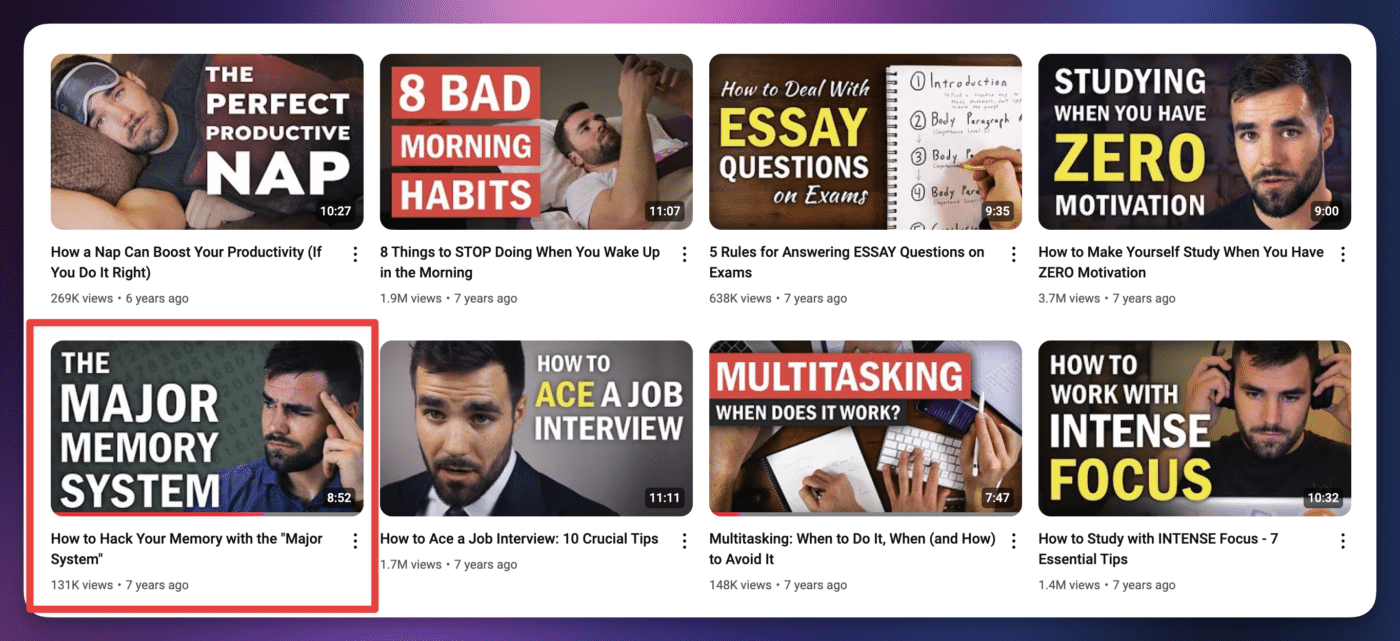
In short, my Major System video was a flop.
But not because it’s a bad video, nor because the topic is inherently boring. In fact, I believe that I could have made one simple tweak that would have turned it into a viral hit.
I should have simply build the video around memorizing pi.
Mike Boyd did so and racked up 2.5 million views:

Answer in Progress gained 1.1 million:

And ASAPScience hit an astonishing 38 million views with their pi song:
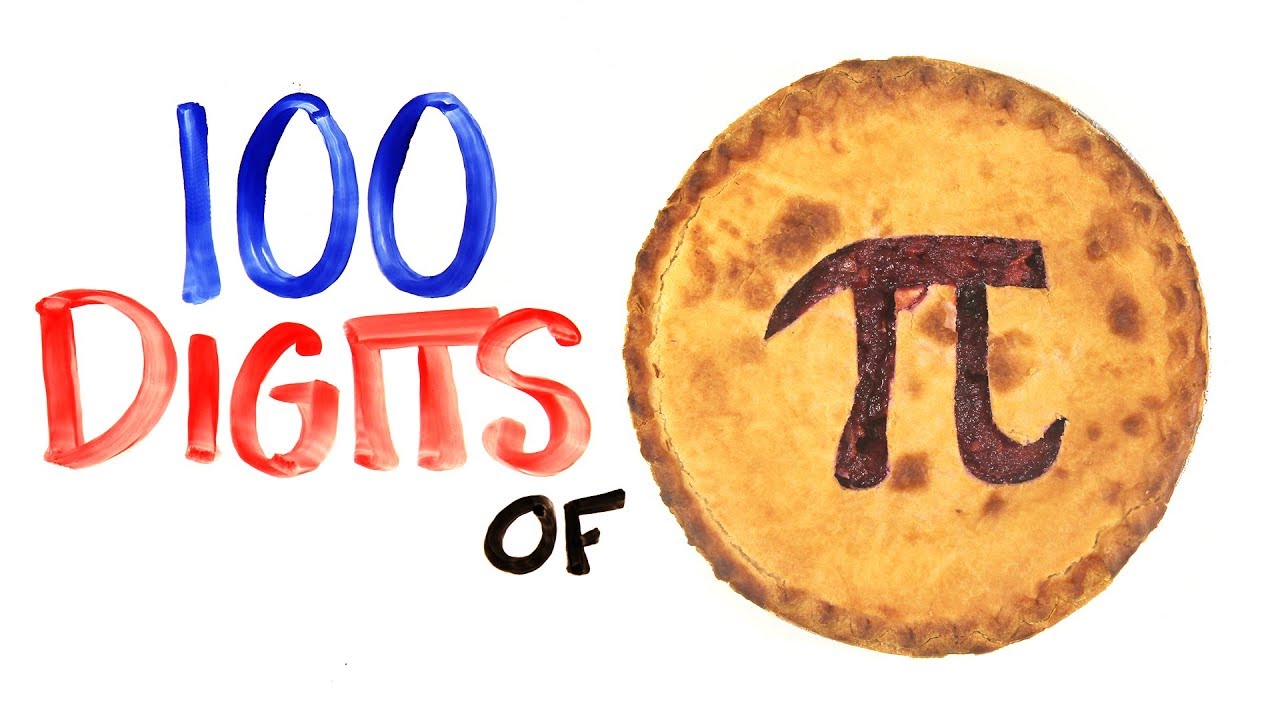
Go do a search on YouTube for “memorizing pi”, and you’ll see a ton of other high-view videos – many of them being breakout hits on their respective channels.
Now do a search for “major system”. I’ll wait.
You’ll see that my video is the highest-viewed video for that term with a paltry 131,000 views.
Here’s the thing: All of these videos are – at their core – about the same thing. They’re all about memorizing a huge string of numbers.
That core idea has many practical uses:
- Memorizing phone numbers
- Memorizing pi
- Memorizing a random number
…but it’s pretty clear which of those uses cases the average YouTube viewer finds compelling.
The lesson contained in this example is perhaps the most important one I can teach you when it comes to creating successful content. You can start with a “core” topic that is genuinely useful, but it’s not guaranteed to be all that compelling when a person is scrolling through their YouTube feed.
Sometimes, you need to connect that core topic to a story, challenge, or other framing device that’s more interesting.
Humans have known this for centuries: Why else would so many lessons be bound up in parables and fairy tales?
Here’s an example where I was very successful:
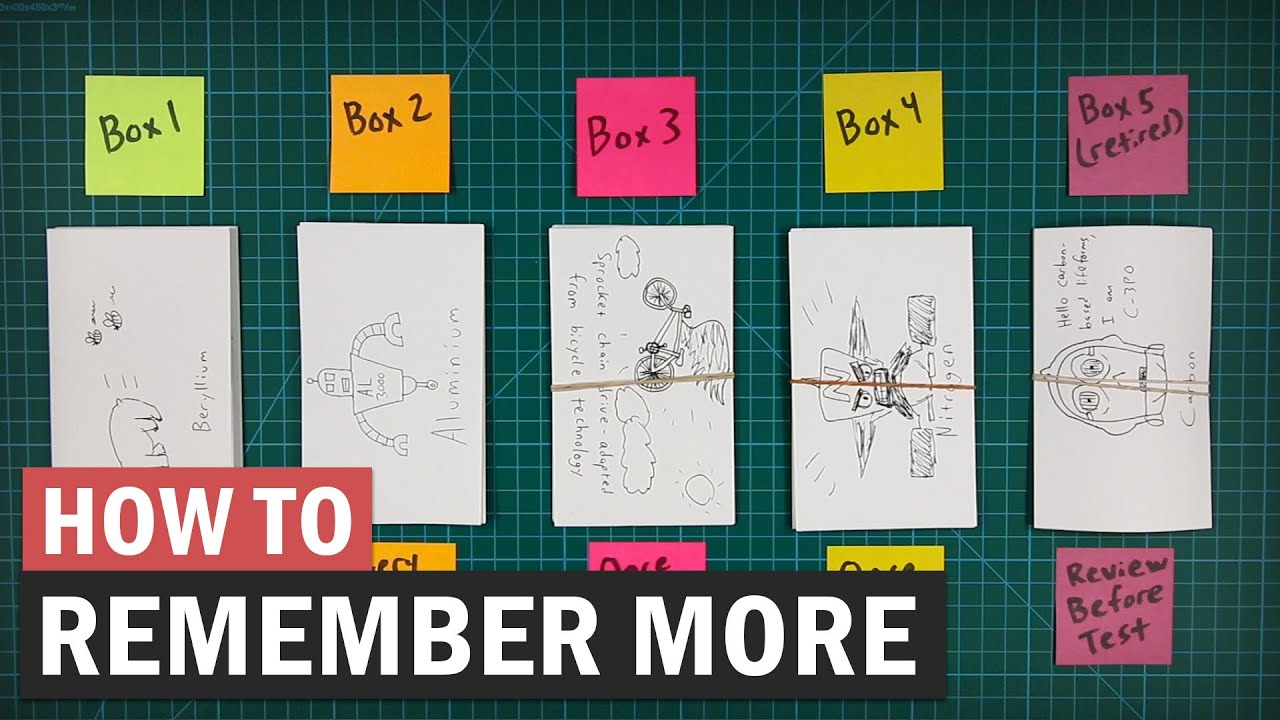
This video is about spaced repetition, which was not a very well-known term when I made the video.
I nearly titled it something boring like “How to use spaced repetition in your studies”, and I’m glad I didn’t. To a person who has never heard the term, it might as well be a random word like phlogiston. And in a title like that, it’s not even promising anything interesting.
Instead, I went with, “The Most Powerful Way to Remember What You Study” – which, in my opinion, is 100% true of spaced repetition. I do believe it’s just about the most useful genuine study technique out there, as it is the learning-equivalent of setting up an optimal training/rest cycle for growing muscle.
With this title, plus the curiosity-inducing system of flashcards in the thumbnail, people clicked the video in droves.
And as an educator, I got to teach the core concept that fascinated me to far more people than I otherwise would have.